DIARY STUDIES
AI-moderated diary studies
Outset's AI moderator probes to get interview depth across multiple sessions over time













Every entry gets a real follow-up, not a reminder to write more.
The probe comes from what the participant actually shared, not from a script. Catch shallow responses before they close the session, and hold the last entry to the standard of the first.
What changes with AI moderation
In the session
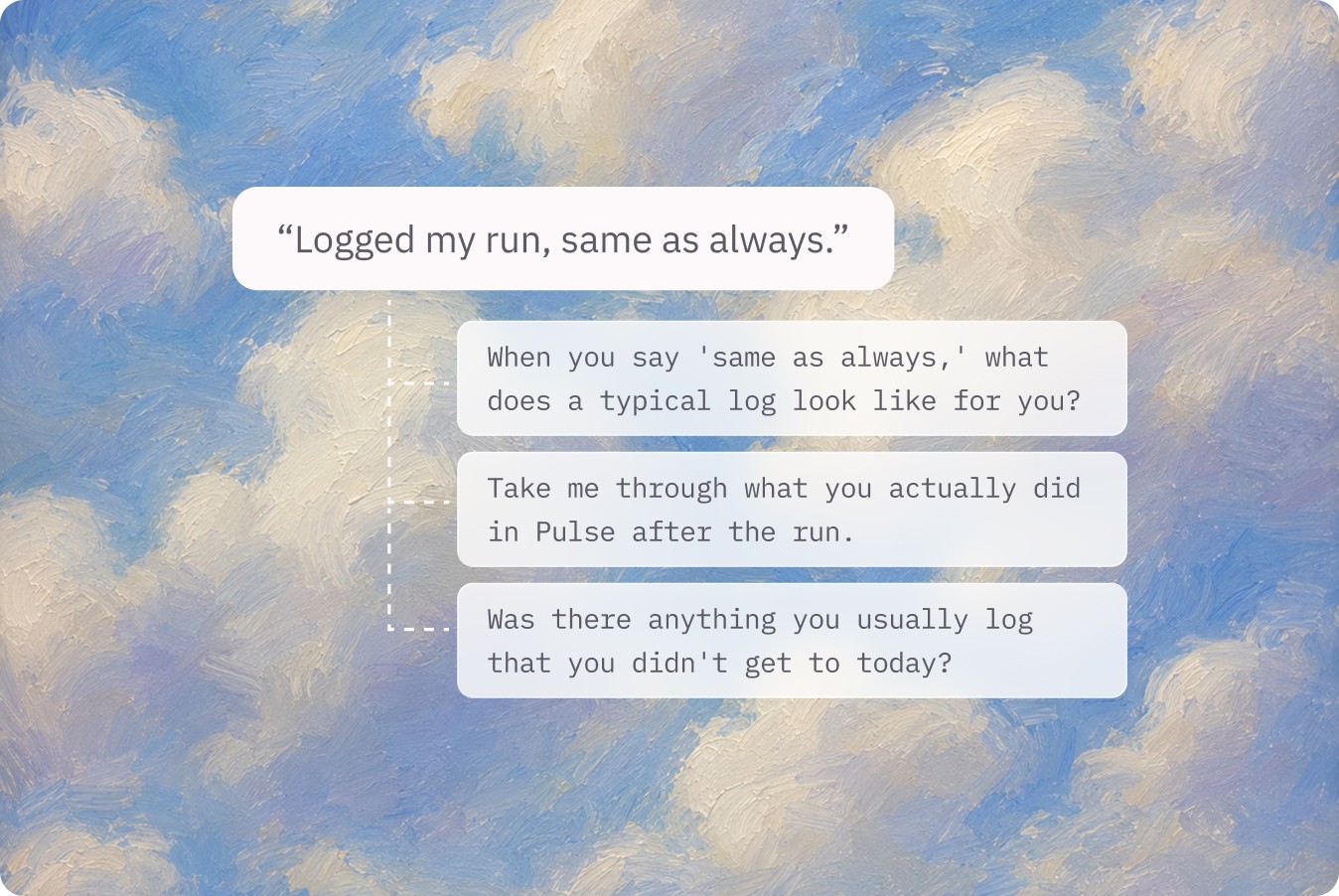
You know the entry: "used it this morning, no problems." The moderator follows up right then, asking what they were doing and what "no problems" actually meant. By the time you read it, it's a real answer.

After the session
Several hundred entries across a two-week study is normally most of someone's month. Ask a question across every session and get an answer while the study is still running, rather than waiting for the last participant to finish.
Across your research
Diary runs on the same platform as the rest of your research. Same AI moderator, same analysis, same security and compliance your team already cleared. The study runs for two weeks instead of an hour, and everything around it works the way it already does.

FAQs
What is a diary study?
A diary study is a longitudinal research method where the same participants report on their experiences repeatedly over days or weeks, rather than once in a single session. Because entries are captured close to the experience, diary studies avoid the recall problem that affects interviews and surveys conducted after the fact.
What makes an AI-moderated diary study different?
In most diary tools, follow-up depends on a researcher reading entries and responding, or on branching logic written before the study launched. Outset's AI moderator generates the follow-up from what the participant just shared, in the session, so a shallow entry gets developed at the point it's created rather than flagged for cleanup later.
How does Outset handle low-quality responses?
Low-quality and off-topic responses are detected during the session, and the moderator probes to develop the answer while the participant is still there. This matters more in diary than in single-session research, because a thin entry on day four can't be recovered once the participant has moved on.
Can I run diary alongside other research?
Yes. Diary studies live in the same workspace as your interviews and usability sessions, so you can ask questions that span both. Each project keeps its own insights page, and Research Desk is where you query across projects.
Can I analyze results before the study finishes?
Yes. You can query across every session that has completed so far and segment the results, so you're working with the data while the study is still in field rather than waiting for the last participant. Aggregate reporting across the full study is expanding.
How do sessions get scheduled?
Three options, set when you create the study: each session opens when the participant finishes the previous one, sessions go out on a repeating interval you choose, or you set specific dates. Studies can run up to 60 sessions.
What happens if a participant misses a session?
They aren't sent the next one, and they're marked as dropped. This keeps every completed record whole, so your dataset reflects participants who went the distance rather than a patchwork of partial journeys. Most teams recruit above target to account for it.